Moses’ Journey Out of Egypt
Moses was called out of Egypt not once but twice—first in body, fleeing for his life, and later spiritually, where he learned humility those forty years in the wilderness. His path mirrors ours more closely than many care to admit. This article centers on one man’s struggle to understand the God of his fathers. Ultimately, he learned to trust God. He learned not to trust in himself nor his station in life.
He was born into a world of despair and hopelessness. Hebrew slaves groaned under the whips of their Egyptian taskmasters. He had survived several directives of Pharaoh to kill the newborn males of the Hebrews slaves.
Egypt Fears Israel
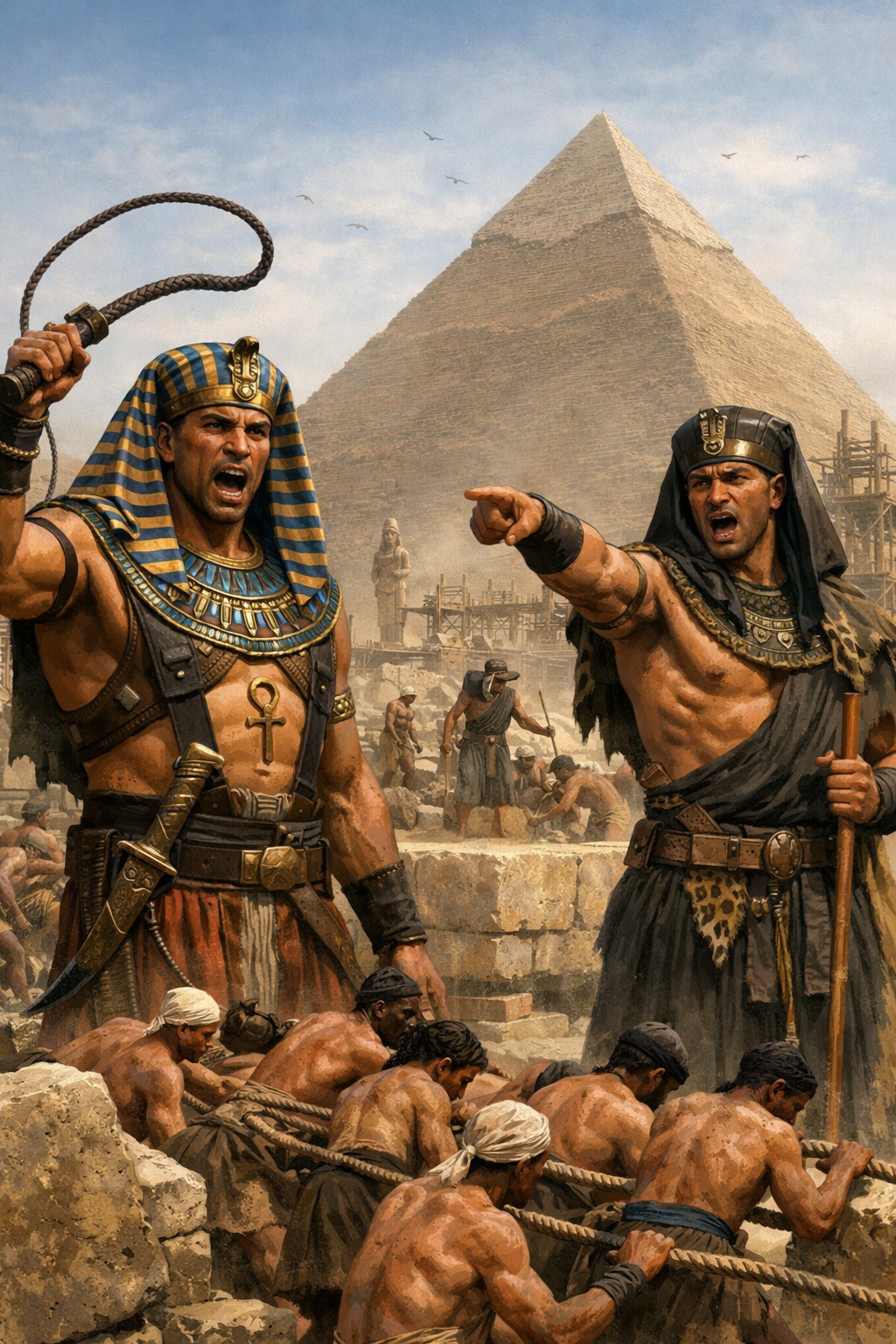
Egyptian Taskmasters
We read, “He said to his people, “Behold, the people of the sons of Israel are too many and too mighty for us [they greatly outnumber us]. Come, let us deal shrewdly with them, so that they will not multiply and in the event of war, join our enemies, and fight against us and escape from the land.” (Exodus 1:9 -10 AMP)1
The Egyptians found themselves in a difficult quandary. They feared the Israelites would become a fifth column inside Egypt in some future war. At the same time, they had become an indispensable part of the Egyptian economy. Egypt could not afford to lose its in slave workforce.
They were desperate to curb the growth of the foreigners amongst them. How they attempted to go about it is found in Exodus chapters one and two. When Pharaoh mentions the need to act ‘shrewdly,’ he is saying in essence, “Let us use strategies and calculated policies in our dealing with the foreigner. We must do everything we can to prevent them from becoming stronger than they already are.” What follows are a series of attempts to do just that.
First Attempt
Pharaohs first attempt to control their population was to work them to death.
The taskmasters were given orders to afflict the slaves without serious regard for their life. The text stops short of saying he intended to work them to death, but the language of “affliction,” “hard labor,” and “ruthless rigor” suggests a policy that showed little concern whether they survived their ordeal or not.
We are told their population increased despite the brutal treatment they endured. When Pharaoh realized this approach was not working, he and his advisors decided to kill the male newborns of Israel. This attempt would meet with failure as well.
Second Attempt
“Then the king of Egypt spoke to the Hebrew midwives... “when you do the duties of a midwife for the Hebrew women, and see them on the birth stools, if it is a son, then you shall kill him; but if it is a daughter, then she shall live” (Exodus 1:15-17).
Later, Pharaoh discovered his orders were not carried out. He demanded to know why his decree had not been implemented.
“So, the king of Egypt called for the midwives and said to them, ‘Why have you done this thing, and save the male children alive?”
“And the midwives said to Pharoah, “Because the Hebrew women are not like the Egyptian women; for they are lively and give birth before the midwives come to them” (Exodus 1:18).
The midwives’ statement was essentially this:
“The Hebrew women were strong and healthy like the animals are, and they didn’t need the assistance of the midwives” (v. 19).
The cultural context of this phrase should be understood as a compliment and not a derogatory comment. Pharoah seems to have accepted this reasoning but was determined to stem the continued growth of the Israelites.
Were the Two Midwives Egyptian or Israelite?
Two women are mentioned early in the Exodus story. Their names were Shiphrah and Puah. It is uncertain if they were Egyptian or Israelite. The text provides a few clues as to their ethnic identity, but not enough to be certain:
Shiphrah and Puah are Semitic names, not Egyptian. In Hebrew, their names provide a hint as to their identity and job function. Shiphrah, roughly translates to beautiful or bright; Puah, means to cry out or referring to that of a newborn crying.
Now to the matter of their ethnicity. Many scholars suggest Pharoah might have used these two women (Egyptian) to supervise the Hebrew midwives. This, it is argued, was an attempt to monitor the growth of the strangers amongst them. While plausible, this argument is not conclusive, nor does the text clearly support this conclusion.
Other scholars feel the text suggests they were Israelites. These two women, Egyptian or not, are depicted as being supervisors of a guild of midwifes. They were charged with supervising the community of midwives who assisted the Israelite women as they gave birth.
Third Attempt
Having failed a second time to murder the male children of the Israelites he ordered that all newborn males be expose to the environment (drown them in the Nile) in such a way that they would die.
“Pharaoh commanded all his people, saying: Every son who is born {amongst the Hebrews} you shall cast into the Nile, but every daughter you shall let live.” (Exodus 1:22)
Who Was to Expose the Newborn?
“Pharaoh commanded all his people, saying:
Every son who is born you shall cast into the Nile,
but every daughter you shall let live.” (Exodus 1:22)
Literal sense:
Thus, the context reveals a state-sponsored license to kill. Those doing the killing were Egyptians who were following the decree of Pharaoh. They believed him to be the embodiment of the god Horus. To the Egyptian mind they had been told by the human incarnation of Horus to kill the enemy within.
Egyptologist Geraldine Pinch summarized who Horus was and his importance in the Egyptian pantheon. She states that Horus was the falcon-headed Egyptian god of kingship and of the sky. He was believed to be the divine protector of Egypt and the role model for how a Pharoah was to rule. (Summary from: Egyptian Mythology: A Guide to the Gods, Goddesses, and Traditions of Ancient Egypt, by Geraldine Pinch).
Another fascinating point of the myth surrounding Horus is found in Egyptian texts which described the childhood of Horus and protective role the Nile played in preserving Horus from Set, a rival god. They myth concludes with Horus ultimately defeating Set to the claim for the throne of Egypt. 2
State Sponsored Genocide
Nothing less the state sponsored genocide was what Pharaoh commanded.
“So, Pharoah commanded all his people, saying, “every son who is born {among the Hebrew slaves} you shall cast into the river, and every daughter you shall save alive. Acts 7:19 the word “exposed” can also read “abandoned.”
The Amplified Bible reads: “Then Pharaoh commanded all his people, saying, “Every son who is born [to the Hebrews] must be thrown into the Nile, but every daughter you shall keep alive.”
Summary
Exodus 1 presents Pharaoh’s policy in three escalating stages:
First economic oppression through ruthless labor,
then secret infanticide through the midwives,
and finally open genocide through a national decree to drown the Hebrew boys in the Nile.
Moses is Born
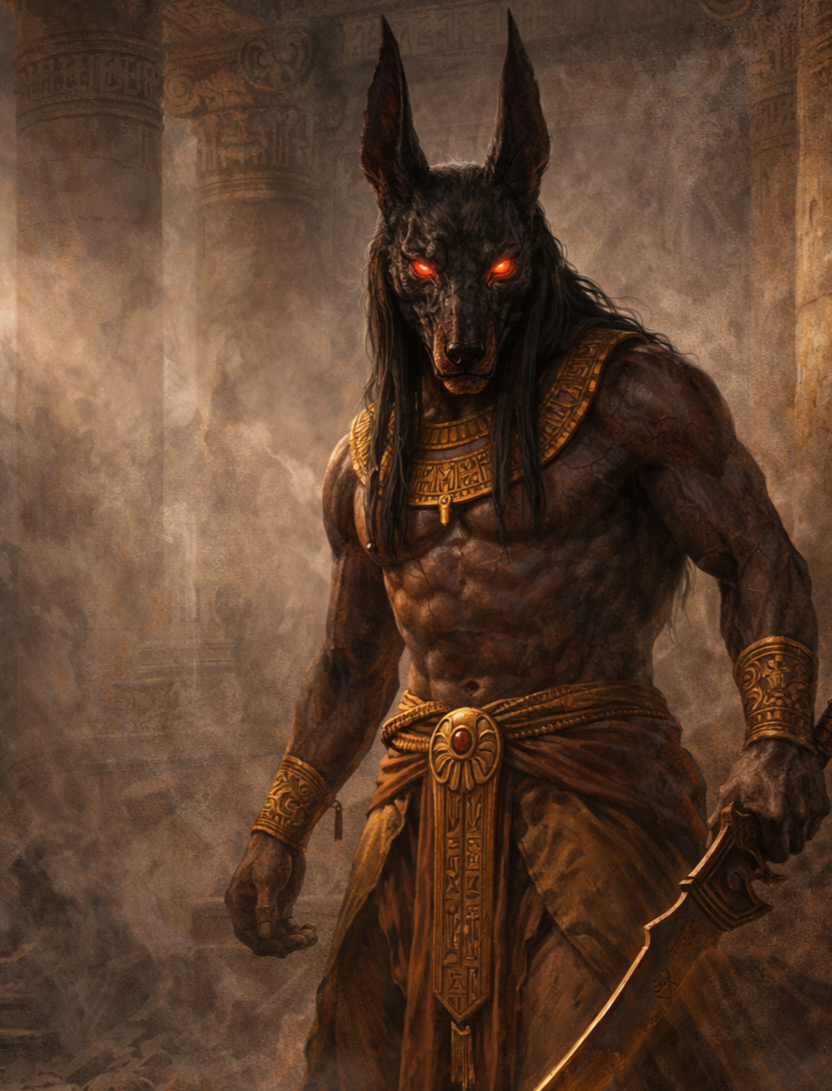
Seth
Amid this chaotic environment, Moses came into the world. Scripture tells us he was no ordinary child. Why? What was so out of the ordinary about this baby boy? A study into the Hebrew wording should prove helpful.
“In Exodus 2:2, the word translated “beautiful” comes from the Hebrew טוֹב (ṭôb), a common word meaning good, pleasant, or fine. In this context, it describes Moses as an unusually fine or goodly child, prompting his parents to hide him from Pharaoh’s decree.
“The New Testament writer in Hebrews 11:23 interprets the Hebrew description and renders it with the Greek ἀστεῖος, emphasizing that Moses was an unusually striking child. (Vine's Expository Dictionary
“The implication in the text is that his parents saw something extraordinary about him, which strengthened their faith to defy Pharaoh’s command.” (Lexical explanation drawn from Vine's Expository Dictionary of New Testament Words).
Moses’ parents saw God’s intervention as evidence that he was a “beautiful child.” The text describes parents who looked at their son as a person destined for remarkable things. They recognized the events surrounding this birth and escape from certain death was not a matter of happenstance but by the will of God. (Hebrews 11:23; Acts 7:20).3
First Three Months
Moses was cared for by his birth mother for the first three months of His life. When it was no longer possible to protect Moses, his mother Jochebed and her husband Amram, decided to make a small waterproof basket, and place it in the Nile.
The placement of the basket was no accident. Jochebed selected an inlet where sacred rites took place by members of the Royal Family and others who were of the priestly class.
“Many temples include sacred lakes, inlets, and small harbors connected to the river. These basins were not merely practical water sources; they were part of the ritual world of Egypt. Priests used them for purification before entering the temple, and water drawn {emphasis mine} from them was used in offerings and ceremonies. In Egyptian thought the Nile also symbolized the primeval waters of creation, the life-giving source from which order emerged. Some temples even had canals or small harbors where sacred boats carrying the images of the gods could travel during festivals. In this way the Nile itself became part of the religious landscape.”4
This cultural background helps us picture the setting of the second chapter of Exodus. The text tells us that Moses’ mother placed the infant in a small basket among the reeds along the bank of the river, and that Pharaoh’s daughter came down to the Nile to bathe.5 The wording suggests the basket was not thrown into the open current but placed in a location where it could easily be found. A protected inlet, basin, or marshy edge of the river would fit the description well. Such places were commonly visited by members of the royal household and by attendants connected to temple life.
It was there that Pharaoh’s daughter often conducted ritual bathing while worshipping the Nile itself. These rituals sites were specially designed to prevent crocodiles and other predators from entering the area where worshippers would conduct their rituals. Moses’ mother believed the princess would find Moses in such a protected area and hoped his life would be spared. (Exodus 2:3-4; Acts 7:21).
Significance of Being Drawn Out
We are told that Pharoah’s daughter drew him out of the Nile and named him Moses— meaning “drawn out”—and, by doing so she could claim that the Nile, had gifted her with the child. Who could argue with that? Ancient Egyptians viewed the Nile as the source of life itself, and Pharoah’s daughter was declaring that the vary source of life had gifted the royal family with the child ‘drawn out’ of the river of life itself. Her use of this event was designed to placate others within the royal court who could have doubted her claim. By adopting him as her son she hoped to place Moses as someone who could become a potential heir, perhaps even a figure touched by Egyptian divinity. (Exodus 2:10; Acts 7:21) 6
Interesting Parallel
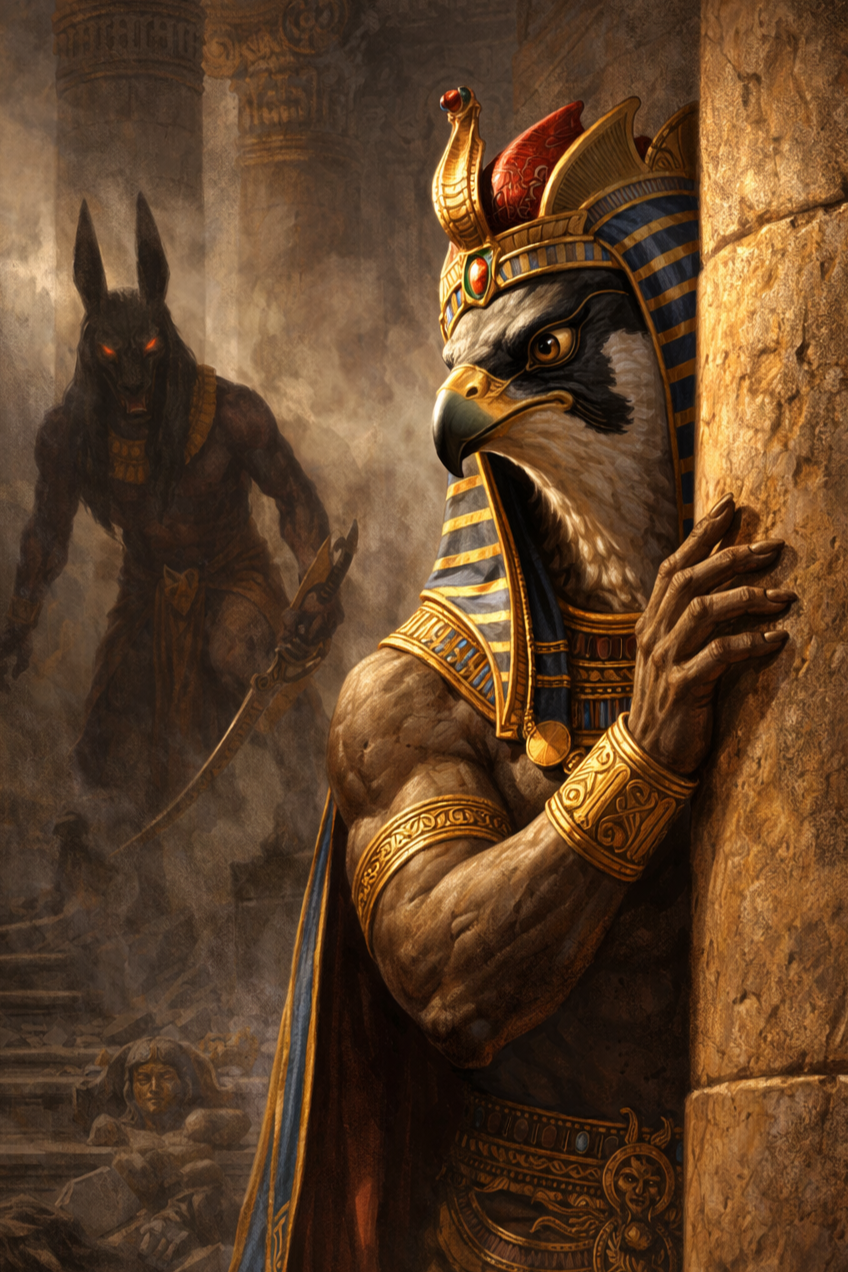
Horus the god of the sky
There is also an interesting parallel in Egyptian mythology. In the story of Horus, the child of Isis is hidden in the marshes of the Nile to protect him from the god Set, who had murdered his father Osiris. The marshes of the Nile carried an association with the protection of a threatened child who would later rise to power. All of this background only added to the legitimacy of the claim that she drew Moses out of the Nile. 7
When the biblical story is read against this background, the irony becomes striking. The river that the Egyptians revered and connected with divine life becomes the very place where God preserves the Hebrew child who would one day confront Pharaoh and lead Israel out of Egypt.
Who Were Possible Heirs?
Many conservative scholars accept the evidence of an ‘early exodus’ of around 1446 BC. This view is supported by the chronological statement in 1 Kings 6:1, (these events would fall during the 18th Dynasty of Egypt).8 The royal household at that time is relatively well documented from Egyptian monuments and inscriptions. The Pharaoh frequently associated with the Exodus in this chronology is Amenhotep II (c. 1427–1401 BC), the son of the great warrior king Thutmose III.9 Understanding the royal family and its heirs helps illuminate an interesting feature of the royal succession during this period.
Amenhotep II did have sons, but the evidence suggests that his successor was not his eldest son. The next Pharaoh was Thutmose IV, who appears to have been a younger son rather than the primary heir.10 One of the key pieces of evidence comes from the famous Dream Stele placed between the paws of the Sphinx at Giza. In that inscription, Thutmose IV records a dream in which the god Harmakhis promised him the throne if he cleared the sand away from the Sphinx.11
Putting Things Together
Within this historical framework, the royal household connected with Moses’ life may have included Hatshepsut, sometimes suggested as the princess who drew Moses from the Nile (Exodus 2:5–10),⁶ Thutmose III, the dominant ruler during Moses’ early life and exile, and Amenhotep II, often proposed as the Pharaoh confronted during the plagues of Exodus. Although Egyptian records never mention Moses directly, the known structure of the 18th Dynasty royal family and its succession questions provide a plausible historical setting that many researchers see as consistent with the biblical account.
Behind the Scenes
Behind the scenes his birth mother nursed him—hired by the princess herself—until weaning, (Exodus 2:6-9), usually around three or four years of age in that era. In those tender years Jochebed whispered stories of Abraham, Isaac, and Jacob; and of course, of Joseph’s dying oath:
“And Joseph said to his brethren, “I am dying; but God will surely visit you and bring you out of this land to the land of which He swore to Abraham, to Isaac, and to Jacob.” Then Joseph took an oath from the children of Israel, saying, “God will surely visit you, and you shall carry up my bones from here.” So, Joseph died, being one hundred and ten years old; and they embalmed him, and he was put in a coffin in Egypt” (Genesis 50:24-26).
All of this, and perhaps more, Jochebed would relay to Moses during those first three or four years of his life. Unlike the Hollywood version, Moses grew up knowing the circumstances of his birth and his miraculous deliverance from certain death. The stories from his mother, and other family members, were implanted in his mind that he was the one who would bring his birth people out of Egypt.
Moses Knew He Was The One Joseph Promised Would Come
After his weaning Moses “was sent out, {and} Pharaoh’s daughter took him away and brought him up as her own son” (Acts 7:21-22). Upon returning to Pharoah’s household he became “learned (well educated) in all the wisdom of the Egyptians and was mighty in words and deeds.”
Moses, it could be said, was an ancient version of a child from a blended family. Like many who grow up in this situation, there would come a time of decision. Questions like who am I, and where do I belong?
By the time he was forty years of age he had answered those questions.
Moses’ Mistake Was in Not Understanding God’s Timing
“Now when he was forty years old, it came into his heart to visit his brethren, the children of Israel. And seeing one of them suffer wrong, he defended and avenged him who was oppressed and struck down the Egyptian. For he supposed that his brethren would have understood that God would deliver them by his hand, but they did not understand.”
“And the next day he appeared to two of them as they were fighting, and tried to reconcile them, saying, ‘Men, you are brethren; why do you wrong one another?’ But he who did his neighbor wrong pushed him away, saying,
‘Who made you a ruler and a judge over us? Do you want to kill me as you did the Egyptian yesterday?’(Exodus 2:10-15) Upon hearing this Moses knew he had misread the situation. He had no choice but to flee Egypt in utter disgrace. Why?
Here are a few important points to consider as we read Hebrews eleven.
“Now faith is the substance of things hoped for, the evidence of things not seen. For by it the elders obtained a good testimony” (Hebrews 11:1).
As we see in the following verses.
“By faith Moses, when he was born, was hidden three months by his parents, because they saw he was a beautiful child; and they were not afraid of the king’s command.
“By faith Moses, when he became of age, refused to be called the son of Pharaoh’s daughter, choosing rather to suffer affliction with the people of God than to enjoy the passing pleasures of sin, esteeming the reproach of Christ greater riches than the treasures in Egypt; for he looked to the reward” (Hebrews 11:23-26).
Again, the text is vague as to details, but what if Moses had been contemplating the question of who he was, and what was to become of him? He may have discussed what his future would be like with his adoptive mother. Surely, she loved him and wanted to best for him. She may have argued that he could do more good for his people as the ‘son of the daughter of Pharaoh.’ Like any parent, she urged him to remember the story of his birth and deliverance. While the text does not speak of such a conversation, it is not beyond the realm of possibility.
Moses Chooses
Over the course of time, he decided to throw in his lot with his birth people. Perhaps he never told his adopted mother what his final decision was, but by killing the Egyptian overlord his fate was sealed.
Killing a servant of Pharaoh was a capital crime, punishable by death. And when his attempt to protect one of” his brethren,” was rebuffed with the statement, “Who made you a ruler and a judge over us?” He was suddenly subjected to many harsh realities:
1-He had been rejected not just by one man, but an entire people. Moses understood this and found he was all alone.
2-He was now rejected by his adoptive family. He had become a man without a country- and for that matter without a future.
Now hunted by his adoptive people as a murderer in the first degree and having previously refused to be called the son of Pharaoh’s daughter, Moses had no place to run but to the desert.
Interesting Points to Ponder
Had the Israelites accepted Moses, perhaps they could have made him their next Pharaoh. After all, that was the only model of governance known by all concerned. That, of course, was exactly what God did not want.
Their refusal to acknowledge him as their leader marked the first step of Moses’ personal exodus.
His Conclusion was Correct but His Timing Off
Moses was right—he was the one chosen to deliver his people from Egyptian captivity. However, his timing as to how God would perform that deliverance was wrong on several levels. He was accustomed to being someone who got things done by virtue of the fact he was connected to Pharaoh’s daughter.
Moses Meets the God of His Fathers
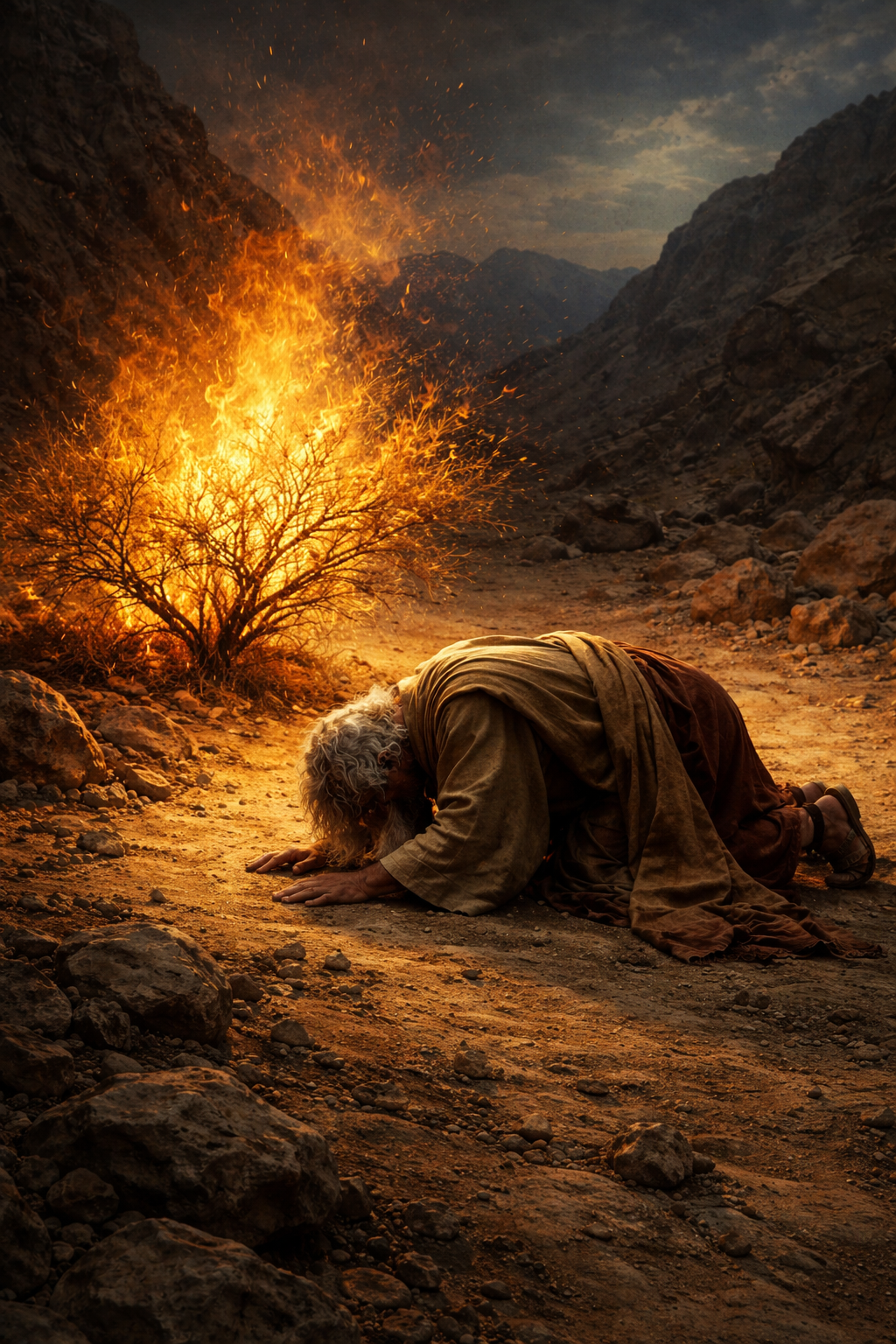
Moses Gets to Know God
Forty years have passed in the desert. During that time, he married Zipporah, tended sheep for her father Jethro, and raised sons Gershom and Eliezer. Once a mighty prince of Egypt, he had become a shepherd—humble, anonymous, stripped of ambition.
Moses, as we will see, struggled to understand why he was not accepted by his people. And he must have wondered why God did not support his efforts. A close examination of the Hebrew text will help us to understand the dynamics between God and Moses’ discussion.
Why do I say this? The answer is found in the debate he had with God while standing before the burning bush.
An introduction of sorts.
While approaching the burning bush a voice was heard to say:
“Do not draw near to this place. Take your sandals off your feet, for the place where you stand is holy ground;” Moreover He said, “I am the God of your father; the God of Abraham, the God of Isaac, and the God of Jacob. And Moses hid his face.” God made it a priority to introduce himself as the same deity his fathers had worshiped. The Hebrew text is richer in meaning than first meets the eye.
Short Diversion from Exodus to The Gospel of Matthew
Jesus, is quoted by Matthew, using the same wording, but this time in Greek.
“The same day the Sadducees, who say there is no resurrection, came to Him and asked Him, saying: “Teacher, Moses said that if a man dies, having no children, his brother shall marry his wife and raise up offspring for his brother. Now there were with us seven brothers. The first died after he had married, and having no offspring, left his wife to his brother. Likewise, the second also, and the third, even the seventh. Last of all the woman died also. Therefore, in the resurrection, whose wife of the seven will she be? For they all had her.”
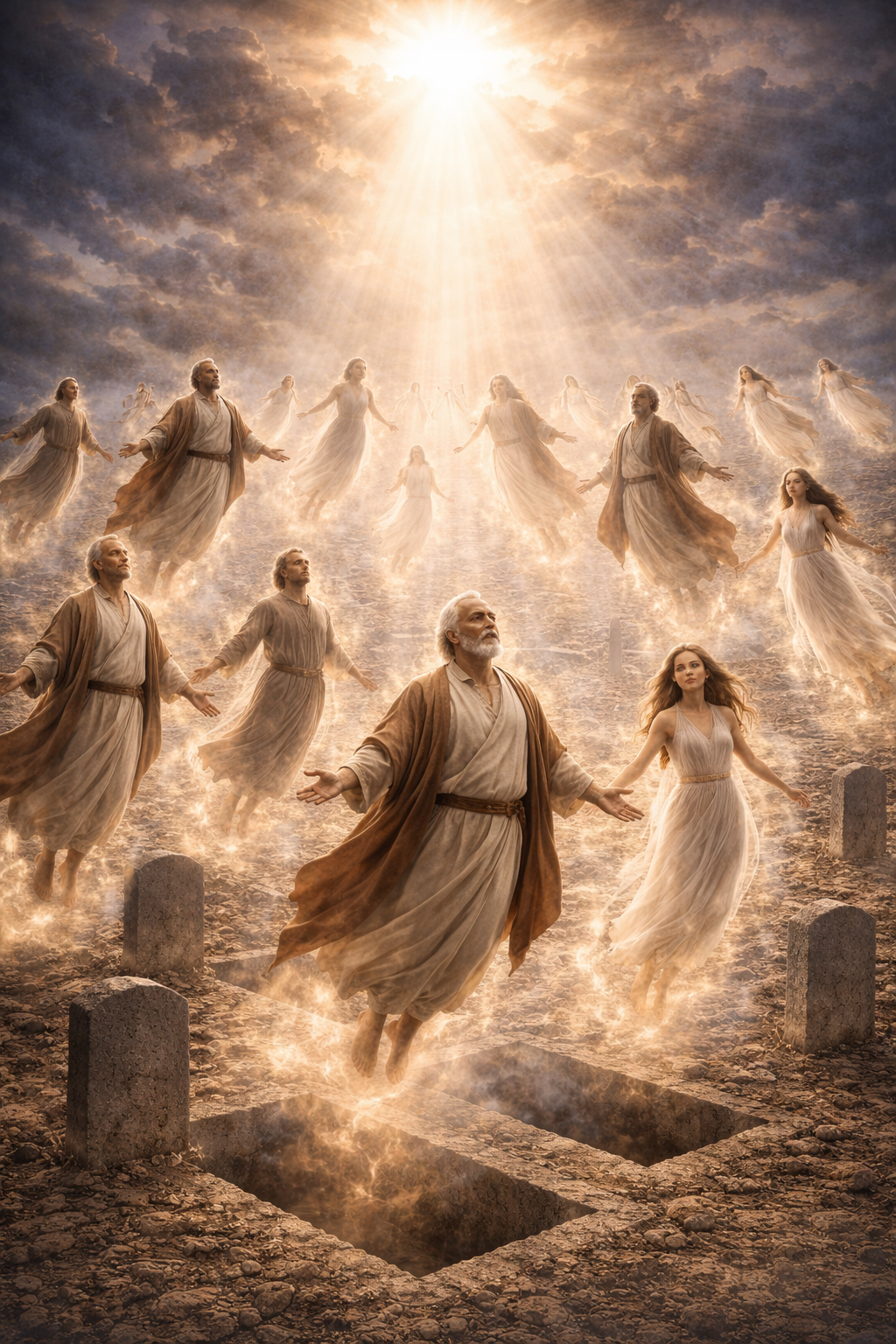
Resurrection of the Saints at The Second Coming
“Jesus answered and said to them, “You are mistaken, not knowing the Scriptures nor the power of God. For in the resurrection, they neither marry nor are given in marriage but are like angels of God in heaven. But concerning the resurrection of the dead, have you not read what was spoken to you by God, saying, ‘I am the God of Abraham, the God of Isaac, and the God of Jacob’? God is not the God of the dead, but of the living.” And when the multitudes heard this, they were astonished at His teaching.” (Matthew 22:23-33)
“The Sadducees’ denial of the resurrection is noted explicitly in the Synoptic Gospels (Matthew 22:23; Mark 12:28; Luke 20:27) and is widely understood to reflect their acceptance of the Torah as primary authority while rejecting developments in resurrection theology” .13
The question put to Christ was intended to trap him. Their question was based on a false premise. It was common knowledge that the Sadducees did not believe in a resurrection of the dead. The question was false on its face.
They had concluded that the Torah, (the writings of Moses), did not mention a resurrection. They hoped Jesus would quote from other Old Testament books they did not consider to be authoritative and thus trap him in his answer.
Instead, Jesus claimed they failed to understand Scripture, (the five books of Moses were the only writing of the Old Testament they considered to be authoritative), and that they did not perceive the power of God. Then Jesus set about quoting from those very Scriptures and as he did they were stunned upon hearing his retort.
Jesus said, “You are mistaken (deceived), not knowing the Scriptures nor the Power of God. Then he proceeded to quote from their approved Scripture.
The Scriptures he read were from the writings of Moses. Jesus claimed they did not understand what Moses meant concerning the resurrection of the dead.
“But concerning the resurrection of the dead, have you not read what was spoken to you by God, saying, ‘I am the God of Abraham, the God of Isaac, and the God of Jacob’? God is not the God of the dead, but of the living. And when the multitudes heard this, they were astonished at His teaching.” (Matthew 22:32 -33)
Exodus 3:6 uses the exact terminology: “I am the God of your father, the God of Abraham the God of Isaac, and the God of Jacob.”
Jesus was claiming the teaching of the resurrection had been contained within the Pentateuch (Books of Moses) but had been overlooked. He was not creating some new understanding concerning the resurrection, instead, he illustrated their lack of understanding of Scripture, and the power of God to resurrect the dead.14
This statement also points to the covenant promises given in Genesis, promises the patriarchs never fully received during their lifetimes—especially the promise of the land. If God remains their God and His covenant is faithful, those promises must still be fulfilled. That fulfillment requires that the patriarchs live again. In this way Jesus showed that the resurrection is not merely a later teaching found in the prophets but was contained within the Torah itself. (To learn more about the plan God has for His people see, “The Gospel Foretold Through the Holy Days.”
He declared to Moses that; “I am the God of Abraham, Isaac, and Jacob,” not I was their God. Since the patriarchs had already died centuries earlier, the statement implies that they will live again. In other words, God does not describe His relationship to the patriarchs as something relegated only to the past.
“The connection between God’s self-identification in Exodus 3:6 and the resurrection hope demonstrates that the doctrine of a resurrection is not merely a later development but is implicitly grounded in the Torah itself.”15
Returning to Exodus:
God Answers Moses’ Questions
“So, when the Lord saw that he turned aside to look, God called to him from the mist of the bush and said, “Moses, Moses!” And he said, “here I am.” (Exodus 3:4)
God introduced Himself to Moses by saying He was the God of Abraham, the God of Isaac, and the God of Jacob. This introduction was critical, (as we have seen earlier in this paper), because the God who has power over life and death is now speaking to him.
That same Being would now take time to answer the nagging questions Moses had concerning his life and the future of his people in Egypt. As God addresses those questions, He is attempting to reassure Moses of His love and concern, for all concerned.
He started by saying clearly that He was not only aware of the sufferings of his people but had in fact taken personal notice of how they had been treated in Moses’ absence.
Introductions Are in Order
The Hebrew text is written to illustrate this point.
“And the Lord said, ‘Seeing I have surely seen the affliction of My people who are in Egypt, and their cry I have heard because of their oppressors, for I know their sorrows. The Hebrew verbiage “surely seen’ is an infinitive absolute verb to be read, “I have certainly seen” 16” I have indeed seen.” The verbiage emphasizes that God was fully aware of His people’s plight. The same emphasis is found in the statement,” I know their sorrows,” The Hebrew sense is “I know intimately the pain they are suffering.”17
Now that God had established Himself as the God of his fathers; and after addressing the perplexing questions Moses had concerning God’s involvement with his suffering people it was time for God to get personal.
“And the LORD said: “I have surely seen the oppression of My people who are in Egypt, and have heard their cry because of their taskmasters, for I know their sorrows” (Exodus 3:7-9).
The Bombshell
God sets up the next portion of this ongoing discussion/debate by saying:
“Come now, therefore, and I will send you to Pharaoh that you may bring My people, the children of Israel, out of Egypt.” So, He said, “I will certainly be with you. And this shall be a sign to you that I have sent you: When you have brought the people out of Egypt, you shall serve me on this mountain.”” (Exodus 3:10-11). So, the sign that God had truly sent Moses would be made clear AFTER they left Egypt and stood before the Mountain of God. Moses was anything but convinced by this assurance.
Arguing With God
Their discussion transitioned from one of introduction and explanation, into an argument as to why God choose someone else to deliver His people. How, you may ask, can anyone debate with God and expect to walk away vindicated? Nonetheless that’s precisely what he did.
“Who am I?” “They won’t believe me.” “I’m slow of speech.” “Send someone else.” (Exodus 3:10)
We read; “Then Moses said to God, indeed, when I come to the children of Israel and say to them, ‘The God of your fathers has sent me to you’ and they say to me, “What is His name?” What shall I say?” Moses was grasping at straws. Behind this argument was the old fear of being rejected once again. (Exodus 3:13)
I AM WHO I AM
In response to Moses’ inquiry as to the name of God, we discover the depth of the divine reply.
Exodus 3:14–15 (Hebrew Summary)
God tells Moses literally, “I will be what I will be.” The verb used here is in the 1st-person imperfect (“to be”), expressing continuing or future being. In v.15 the divine name is introduced, likely meaning “He is / He will be.” Thus, He is / He will be”), presents God as the One whose being is self-determined and enduring.18
Not only is God introducing Himself to Israel as the I AM, who is aware of your needs, wants, and fears, He will be whatever He needs to be in order to meet the needs of His people. This message was also for Moses, who needed this reassurance too.
Moses and Israel were now in personal contact with the God who has made promises to the fathers and will do whatever He needs to do, including raising the patriarchs of old to keep His word to His people.
Footnotes
[1] Scriptures quoted are from the NKJV unless otherwise noted.
2James P. Allen, “Middle Egyptian Literature: Eight Literary Works of the Middle Kingdom,” (Cambridge: University Press, 2015), 120-123.
3 Hebrews 11:23; Exodus 2:2; Acts 7:20
4 Salima Ikram, Ancient Egypt: An Introduction (Cambridge: Cambridge University Press, 2010), 134–137; also see the description of temple sacred lakes and ritual purification practices in temple complexes such as Karnak.
5Geraldine Pinch, Egyptian Mythology: A Guide to the Gods, Goddesses, and Traditions of Ancient Egypt (Oxford: Oxford University Press, 2002), 139–142.
6 Exodus 2:3; Acts 7:21
7 Aidan Dodson and Dyan Hilton, The Complete Royal Families of Ancient Egypt (London: Thames & Hudson, 2004), 125–136.
8 James Henry Breasted, Ancient Records of Egypt, vol. 2 (Chicago: University of Chicago Press, 1906), §§810–815; the Dream Stele of Thutmose IV at Giza
9 Ibid. 136–140.
10 Geraldine Pinch, Egyptian Mythology: A Guide to the Gods, Goddesses, and Traditions of Ancient Egypt (Oxford: Oxford University Press, 2002), 139–142.
11 Aidan Dodson and Dyan Hilton, The Complete Royal Families of Ancient Egypt (London: Thames & Hudson, 2004), 125–136.
12 Biblical Hebrew frequently uses repetition to highlight emphasis or to make distinct elements with a list, Hebrew often restates key terms to stress individual identity or importance. (See Bill T. Arnold and John H. Choi, A guide to Biblical Hebrew Syntax (Cambridge: Cambridge University Press, 2003), pp. 33-35.
13 Josephus, Antiquities 18:16-17; War 2. 164-165.
Craig L. Blomberg, Matthew, New American Commentary (Nashville: B&H 1992), 331-334
14 Brevard S. Childs, Biblical Theology of the Old, and New Testament (Minneapolis: Fortress Press, 1992), 412-413.
15 Brevard S. Childs, Biblical Theology of the Old, and New Testaments (Minneapolis: Fortress Press, 1992), 412-414.
16 William H.C. Propp, Exodus 1-18, Anchor Yale Bible (New Haven; Yale University Press, 1999) 204-206.
17 Bruce K. Waltke and Micael O'Connor, An Introduction to Biblical Hebrew Syntax (Winona Lake, IN: Eisenbrauns, 1990)
18 The Hebrew imperfect can express present or future action, so translations vary between “I am who I am” and “I will be what I will be.” Many scholars prefer the future sense because of the earlier promise in Exodus 3:12, “I will be (אֶהְיֶה) with you.”
End part 1